
Lighting Finish & Shade Samples: An Approval Checklist
Check metal finish, glass or stone shades and matching fixture configurations before ordering a coordinated lighting set.
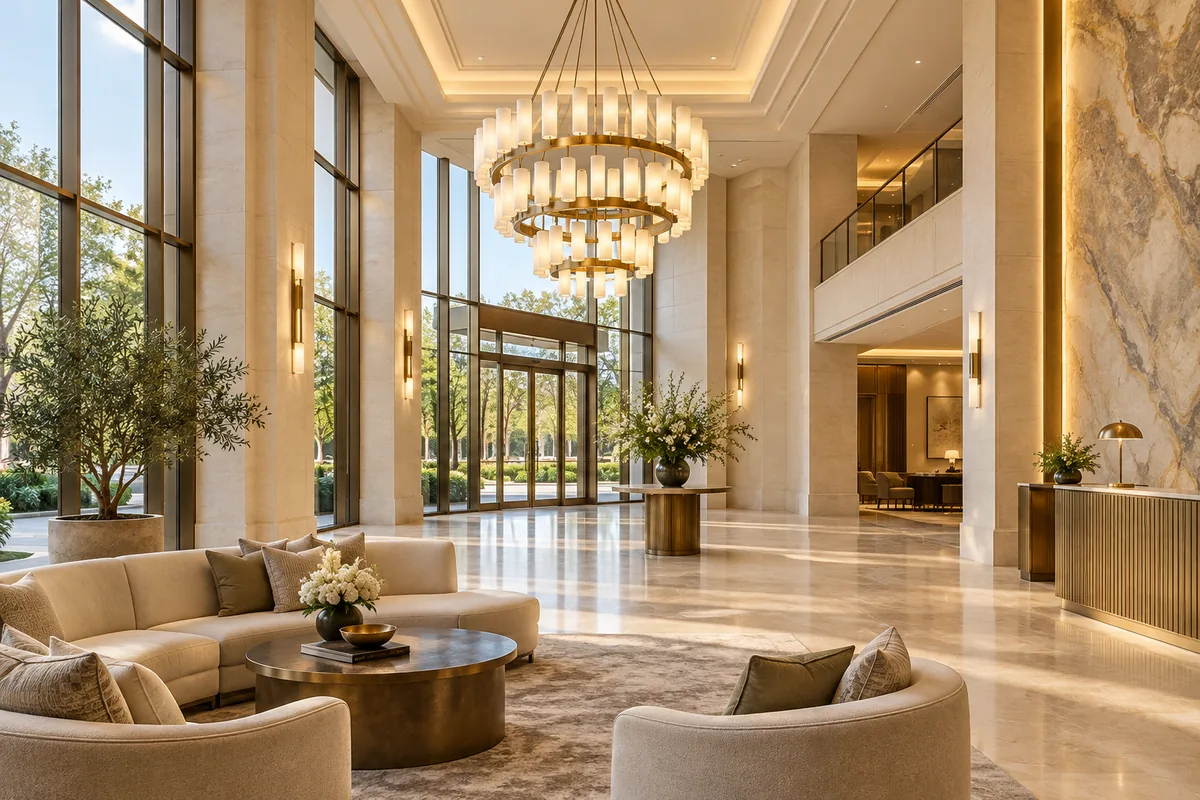
Two lights described as gold, copper or natural stone may not be intended to look identical. A useful sample approval records the exact model, finish and components being accepted. It gives the buyer and supplier a common reference for a single room, a repeated hotel layout or a later order.
1. Identify what the sample represents
Label the sample with the model, SKU, finish reference and date. State whether it is a complete fitting, a metal swatch or one shade. A small metal swatch can illustrate a surface finish but does not establish the appearance or assembly of the complete chandelier.
In the HAOFLUX catalogue, some chandelier model names list copper, wood and jade while the variant names identify glass shades. Ask which component uses which material instead of assuming the whole shade is jade. Likewise, keep natural-stone and faux-stone wall-light selections separate in the approval record.
2. Check the selected combination together
Compare the metal, shade and nearby room finishes in the setting relevant to the project. Review the fitting with the light off and with the intended light source where available. Record which light source was used; a sample photograph taken under another lamp is not a controlled reference.
Photographs help identify a sample, but they should not be the only acceptance description. Add written notes about the agreed surface appearance, shade selection and any variation you discussed. If several fixtures must form a matching set, say so before confirming the order.
- Overall and close-up photographs tied to the sample ID
- Selected shade material and decoration
- Metal and wood appearance to be matched
- Which aspects remain open for confirmation
3. Do not transfer approval between similar models
8301 and 8312 both list glass-shade configurations but are separate chandelier models. 8302 and 8311 list landscape shades; their artwork and frames should be compared using their own references. Approving one image does not approve every SKU with a similar lamp count.
For outdoor wall lights, HF-5046 identifies natural stone and HF-5047 faux stone within related 6010 listings. Record that distinction along with the finish. Material identity, dimensions and installation suitability are separate checks: approving appearance does not confirm a protection rating.
4. Keep a concise approval record
Use a dated record with the project, model/SKU, sample reference, approved attributes, unresolved points and the person confirming them. If a replacement sample is supplied, record which earlier reference it supersedes. Ask for the agreed sample reference to appear in the order confirmation.
For a later repeat order, provide the original order and sample references and request a new confirmation. Do not assume the same shorthand colour name is enough to match a previous purchase. Confirm sample availability, cost and shipping arrangements with HAOFLUX before requesting a physical sample. No free-sample or fixed turnaround promise is implied.
5. Finish the technical and commercial checks
Once appearance is agreed, confirm dimensions, electrical requirements, fixing and included components for the selected configuration. Ask for the documents needed by your installer. Keep product pricing, freight and any separately quoted items visible in the order.
Send your selected models and room references to xue@haoflux.com. HAOFLUX accepts quality-related returns or exchanges under its published policy, rather than change-of-mind returns. Clear sample and specification records help both sides understand the agreed selection.