
Hotel Chandelier Procurement: A Practical Specification Checklist
Plan hotel lobby chandeliers with a clear brief covering dimensions, hanging height, finishes, electrical configuration, maintenance and delivery responsibilities.
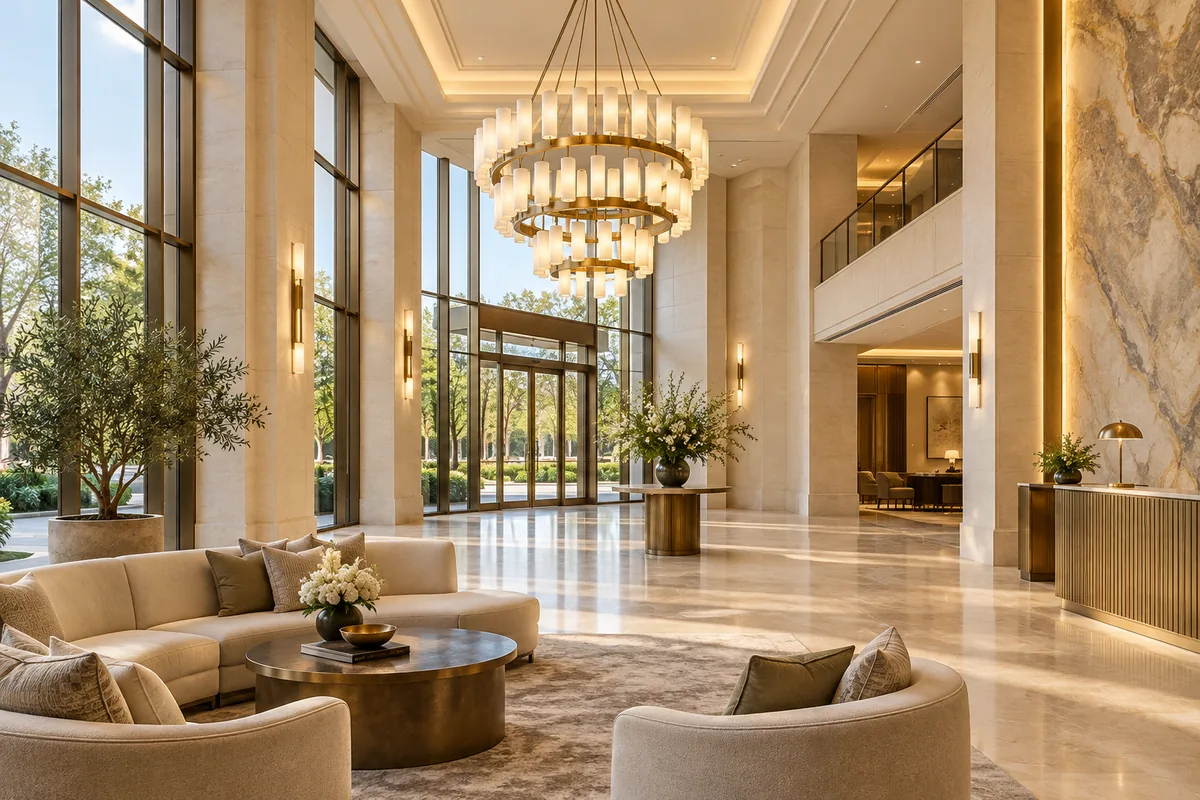
Before asking for a hotel chandelier quotation, prepare a drawing or marked-up photograph showing the room, the intended hanging point and the finished ceiling height. Then identify the exact model, configuration and quantity you want to compare. A photograph establishes the visual direction; a written fixture schedule makes offers comparable and helps the designer, purchaser and installer work from the same information.
1. Define the space and the viewing angles
A lobby chandelier needs to work from the entrance, reception desk, seating area and any upper-level balcony. Check how its outline overlaps with signs, artwork and doorways. A large fixture can become visually crowded in a shallow room, while a narrow multi-tier design may read better in a tall void. Do not select diameter from floor area alone.
Mark the proposed diameter and bottom edge on a room elevation. Review the result with the interior designer and installer, including walking routes, overhead clearances, doors and the access route for lifting equipment. Use the project’s actual dimensions and local requirements instead of treating a general online sizing rule as an installation specification.
- Room length and width, finished ceiling height and ceiling or soffit details
- Proposed fixture diameter, body height and total drop including suspension
- Entrance and balcony views, furniture positions and access for maintenance
2. Compare a complete fixture configuration
Two chandeliers with a similar photograph may have different lamp counts, frame dimensions, surface finishes and glass details. Give each proposed configuration its own schedule reference and record the supplier’s model code. State whether the quoted item includes the suspension, canopy, lamps or LED modules, drivers and any project-specific accessories.
Ask which dimensions are fixed and which changes need separate confirmation. A finish sample can help align expectations across chandeliers, wall lights and metalwork, but it should be identified in the order rather than left as an informal visual reference.
- Model code, quantity, dimensions and lamp or module count
- Metal finish and shade material or colour
- Included components, optional items and any requested modification
3. Confirm light quality and control compatibility
Specify the site supply and the desired light appearance separately from fixture style. Watts describe power consumption; light output is compared in lumens. Correlated colour temperature describes the appearance of the light, while colour rendering concerns how objects look under it. A warm-looking photograph does not establish any of these values for the product being ordered.
If the hotel uses dimming or a building control system, send the exact control requirements before the configuration is agreed. Ask for confirmation that the proposed lamps or drivers work with that system, including the intended dimming behaviour. The US Department of Energy’s LED guidance distinguishes colour-tunable and dim-to-warm products: lowering brightness does not automatically mean the light becomes warmer.
- Supply voltage and frequency required by the project
- Requested light output, colour temperature and colour-rendering information
- Lamp base or LED/driver configuration and confirmed control requirements
4. Plan installation and future maintenance
Confirm the fixture’s assembled weight, fixing arrangement and installation documentation. Have the project’s qualified installer or structural professional assess the support and the proposed mounting method. Decorative ceiling finishes should not be assumed to provide structural support.
Discuss how glass parts, lamps and drivers will be reached after the lobby opens. Ask which parts can be replaced, what access is required and whether spare components can be ordered with the fixture. For tall spaces, the cost and disruption of future access deserve consideration alongside the purchase price. Agree these points before the final ceiling and furniture layout are fixed.
5. Separate product price from project delivery costs
Compare the same configuration and quantity when reviewing prices. HAOFLUX’s displayed product prices are selling prices for the listed configurations. Transport is quoted separately according to the destination; the displayed product price should not be read as a delivered project total. Ask the quotation to identify the destination, packing, transport scope and any charges or services that are excluded.
HAOFLUX supplies both stocked items and items made to order. Confirm the status and delivery schedule for your specific configuration before placing an order. Do not plan an installation date from a generic website delivery estimate. The current return policy accepts returns or exchanges for quality issues, not change-of-mind returns; agree the order details and check the published policy before payment.
6. Send a brief that can be checked
For example, a useful first enquiry might describe two matching lobby fixtures, include an elevation of the reception space, identify a catalogue model and list the required finish and control system. If a dimension or technical requirement is not yet decided, label it as open for confirmation. This is more useful than asking for the price of a chandelier in an unlabelled inspiration image.
Send the brief to xue@haoflux.com or use the contact page. The aim of the first exchange is to confirm a suitable configuration and the information still needed for a quotation. Final installation and electrical decisions belong with the project’s qualified professionals.
- Project country/city and delivery destination
- Marked-up room drawings or site photographs
- Selected model, quantity, finish and proposed dimensions
- Electrical/control requirements and requested delivery timing
- Questions about packing, replacement parts and order scope